Arturia MicroFreak: The Weird Little Synth for Producers Who Want Less Predictable Beats
For Producers Who Want Less Predictable Beats
A lot of producers do not need another polished preset. They need one sound that makes the beat feel different.
That is where the Arturia MicroFreak Hybrid Synthesizer makes sense. It is compact, strange, affordable for a hardware synth, and built for producers who want to create sounds that feel less obvious than the same soft synth presets everyone else is scrolling through.
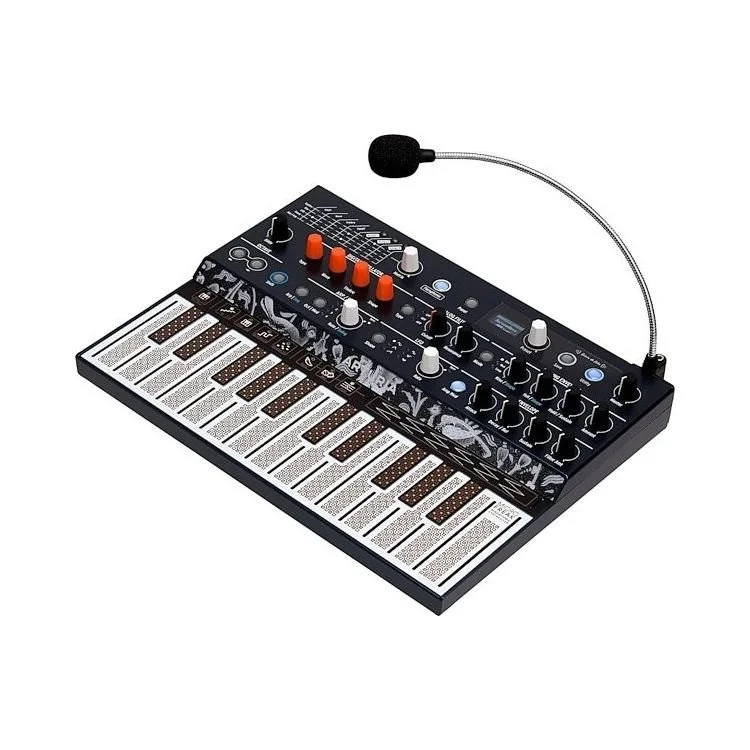
The MicroFreak is a hybrid synthesizer that blends digital synthesis with analog filtering, a flat poly-aftertouch keyboard, sequencing tools, and a sound engine that can move between wavetable synthesis, virtual analog tones, sample playback, physical modeling, granular-style textures, and experimental oscillator modes. zZounds describes it as a budget-friendly, trailblazing synth for curious musicians who want unusual sounds and a unique interface.
For beatmakers, electronic producers, alternative R&B artists, synth-pop writers, and sample-based producers, the MicroFreak is not just a keyboard. It is a sound-design box. You can use it to make hooks, basslines, arps, strange one-shots, intro textures, risers, vocal-like synth lines, and original loops to chop up later.
Why the MicroFreak Feels Relevant Right Now for Synth-Pop, Trap, and Electronic Producers
Synths are all over modern music again. You hear them in synth-pop, alt-pop, indie electronic, dark R&B, trap, rage beats, ambient rap, underground electronic music, and cinematic pop. Recent synth-heavy pop records show how much listeners still respond to moving keyboards, pulsing arps, emotional pads, and synth lines that sit underneath the vocal without taking over the song.
The point is not that every artist in that lane used the Arturia MicroFreak. The point is that producers are still chasing that same feeling: bold drums, synths creeping underneath the vocal, a hook that feels emotional but still has energy, and one strange sound that makes the track recognizable. That is the lane where the MicroFreak can be useful.
It can help you make synth-pop hooks, alternative R&B textures, dark trap melodies, rage beat leads, hyperpop arps, ambient intro pads, indie electronic basslines, glitchy transitions, vocoder-style vocal effects, cinematic sound-design moments, and original loops to resample.
The Best Thing About the MicroFreak: It Pushes You Into Weird Ideas
The MicroFreak is not trying to feel like a normal piano or a safe vintage keyboard. That is the whole point.
The flat PCB-style keyboard is pressure-sensitive and supports poly-aftertouch, which means your fingers can control sound movement in a way that feels different from a basic MIDI controller. That makes the Arturia MicroFreak especially good for producers who want movement.
You can hold a note and make it bend, open up, thin out, get brighter, get harsher, or shift into something stranger. That kind of movement is useful for modern production because static sounds get boring fast. A synth line that changes over time can make a simple loop feel alive.
This is where the MicroFreak beats a lot of boring beginner synths. It is not just giving you bass, lead, and pad presets. It is giving you a way to stumble into sounds you would not have designed with a mouse.
The Types of Songs You Can Make With the Arturia MicroFreak
The Arturia MicroFreak Hybrid Synthesizer fits a lot of different song ideas. It works especially well when the track needs personality, movement, or a sound that feels slightly unstable in a good way.
Dark Trap and Moody Rap Beats
Use the MicroFreak for eerie lead lines, detuned melodies, distorted basses, and background textures. A simple two-bar synth phrase can become the main identity of a beat once you pitch it down, reverse it, filter it, or chop it like a sample.
This is good for producers making dark trap, underground rap, rage beats, ambient trap, and cinematic hip-hop. If your beat already has drums and 808s but still feels too plain, a weird MicroFreak lead can give it a stronger identity.
Synth-Pop Hooks and Electronic Pop Melodies
If you are inspired by current synth-pop and electronic pop, the MicroFreak can help you write bright hooks, pulsing arps, and emotional keyboard lines.
Think less “clean piano chord progression” and more “weird synth line that instantly tells you what song you are in.”
That is why the MicroFreak fits producers chasing sounds in the world of MUNA, Charli XCX, The Weeknd, Tame Impala, Caroline Polachek, Yeule, Grimes, or 070 Shake. This does not mean those artists used the MicroFreak. It means the MicroFreak can help producers work in synth-forward lanes those listeners already care about.
Alternative R&B and Atmospheric Vocal Tracks
For artists recording vocals, the MicroFreak can sit behind the voice without taking over the track.
Use it for soft pads, ghostly counter-melodies, filtered bass notes, or little ear-candy parts between vocal lines. If the song feels empty between phrases, a MicroFreak texture can fill the space without sounding like a stock preset.
This is a good lane for alternative R&B, bedroom pop, melodic rap, ambient pop, and emotional electronic tracks.
Electronic and Experimental Beats
This is where the MicroFreak feels most at home. Because it has multiple oscillator engines and creative modulation tools, it works well for producers who want glitchy sounds, metallic tones, odd rhythms, and textures that feel unstable in a good way. It is a strong choice for producers searching for a weird synth for producers, a best budget hardware synth, or a hardware synth for experimental electronic music.
Original Sample Loops for Sample-Based Producers
This might be the best use for SampleDex readers.
Make a short phrase on the MicroFreak. Record it into your DAW. Then treat it like a sample.
Chop it. Reverse it. Pitch it. Stretch it. Run it through reverb. Put vinyl noise under it. Bounce it again. Now you have a loop that did not come from a pack, a preset, or someone else’s melody.
That is the real value: the Arturia MicroFreak can help you create original source material.
Artists, Producers, and Sound Designers Connected to the MicroFreak
This is where the article should be careful and credible.
Sound designer and producer PaprTape has been featured by Arturia discussing the MicroFreak in a Burberry project, including scratch-like sound effects and pads. That is a strong real-world example because it shows the synth being used for visual storytelling, fashion-film sound design, and atmosphere — not just keyboard parts.
Producer and sound artist Bienoise has also mentioned owning an Arturia MicroFreak as part of a compact performance setup. That supports the idea that the MicroFreak fits experimental, portable, laptop-less, and performance-based workflows.
For SEO and reader context, the MicroFreak will appeal to fans of producers and artists known for synth-heavy or experimental textures: SOPHIE-inspired hyperpop producers, Charli XCX-style electronic pop producers, The Weeknd-style dark synth-pop producers, Tame Impala-style psychedelic synth producers, Kaytranada-style groove producers, Gesaffelstein-style dark electronic producers, Travis Scott-style atmospheric trap producers, 070 Shake-style alternative R&B producers, and MUNA-style synth-pop writers.
That does not mean those artists used the MicroFreak. It means the MicroFreak can help producers explore sound-design lanes their fans already search for.
What the Arturia MicroFreak Is Great At
The MicroFreak is strong when you want character. It is good for producers who want sounds that are weird, digital, glitchy, sharp, expressive, textured, unstable, metallic, dreamy, synthetic, experimental, and easy to resample.
The sequencer is another major reason producers should care. zZounds mentions the MicroFreak’s Spice and Dice functions, which can add controlled randomness and variation to sequences. That matters because modern beats often need movement. A stiff arp can get annoying. A pattern that shifts slightly can keep a loop interesting.
For producers searching for MicroFreak sound design, MicroFreak for sample-based producers, synth for making loops, best synth for original melodies, or MicroFreak for beatmaking, this is the main reason the synth works: it gives you motion and personality fast.
What the MicroFreak Is Not Good At
The Arturia MicroFreak is not perfect. First, the keyboard is strange. Some producers will love the flat touch surface. Others will hate it. If you want a normal piano-style feel, this is not that. It is more like a performance surface for synth expression than a traditional keyboard.
Second, it does not give you the same experience as a big polyphonic analog synth. It can make chords and pads, but it is not the synth to buy if your main goal is huge luxury analog pads with a traditional keyboard feel.
Third, it benefits from effects. The dry sound can feel raw, and the MicroFreak is usually more exciting when you run it through reverb, delay, saturation, chorus, distortion, or other processing in your DAW. That is not necessarily a problem for producers, because most people will process it anyway, but it does mean you should not expect every sound to feel record-ready with no mixing.
Fourth, it has a learning curve. The MicroFreak rewards experimentation, but that also means it can feel odd if you only want instant polished presets. It is better for producers who like turning knobs, recording mistakes, and finding happy accidents.
Who Should Buy the Arturia MicroFreak?
The Arturia MicroFreak Hybrid Synthesizer is a strong fit for beatmakers who want original melody loops, producers tired of stock VST presets, artists making synth-pop, alt-pop, electronic, or alternative R&B, trap producers who want strange leads and textures, sample-based producers who want to create their own sounds to chop, home studio producers who want a compact hardware synth, sound designers making FX, transitions, and atmospheres, and artists who want hands-on gear without buying a huge workstation.
It is probably not the best first purchase if you still need basic studio gear like an audio interface, microphone, headphones, or monitors. But if your setup already works and you want something that sparks ideas, the MicroFreak is a smart creative upgrade.
How to Use the MicroFreak in a Beat
Here is a simple workflow:
Start with drums. Find a tempo and bounce. Create a short MicroFreak melody. Record it as audio. Duplicate it. Pitch one copy down. Reverse another copy. Filter the original. Add delay and reverb. Chop the best two bars. Build the hook around the weirdest part.
That is how the MicroFreak becomes more than a synth. It becomes a sample source.
You can make your own synth loops, bounce them, and treat them like crate-digging material. That is the difference between using a preset and building a sound that belongs to you.
Final Take: Is the Arturia MicroFreak Worth It for Producers?
The Arturia MicroFreak Hybrid Synthesizer is not for producers who want the safest, cleanest, most traditional keyboard. It is for producers who want personality.
It can help you make synth-pop hooks, dark trap melodies, experimental textures, alternative R&B pads, glitchy arps, weird basses, and original loops to resample. It has real limitations — the keyboard is unusual, the dry sound may need effects, and it will not replace a full workstation — but those limitations are part of why it feels different.
For SampleDex readers, the biggest reason to care is simple: the MicroFreak can help you create sounds that do not already exist in your loop folder.
If your beats are good but predictable, this is the kind of synth that can push them somewhere stranger.
Check out the Arturia MicroFreak Hybrid Synthesizer on zZounds.
Disclosure: SampleDex may earn a commission when you shop through the zZounds link in this article, at no extra cost to you.