The Underground Artist Roadmap: What Producers and Artists Can Learn From the New Wave in 2026
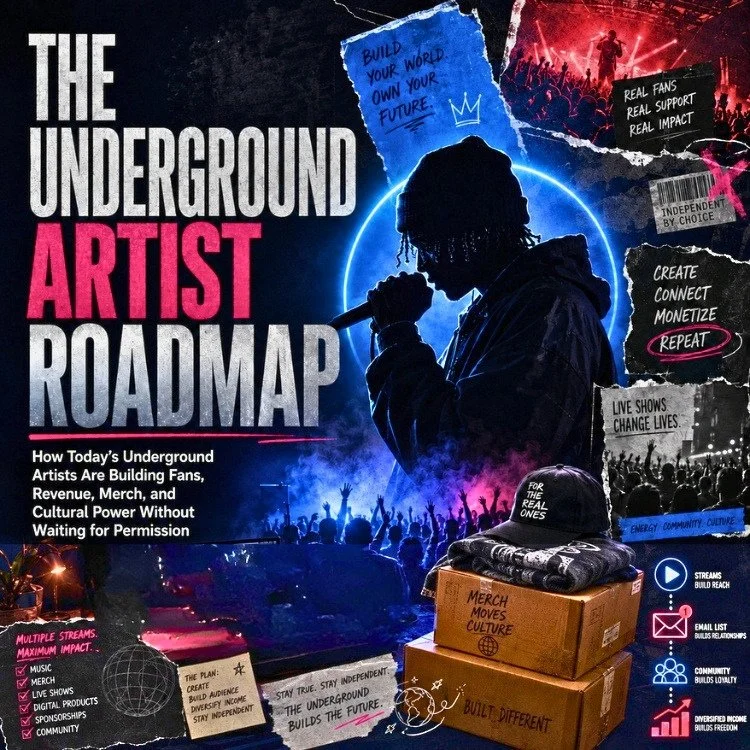
Sampledex: The Underground Artist Roadmap
How Today’s Underground Artists Are Building Fans, Revenue, Merch, and Cultural Power Without Waiting for Permission
The music industry has changed dramatically. Artists no longer need major labels, expensive studios, celebrity features, or widespread approval to begin building meaningful careers. What they do need is a clear strategy. The newest generation of underground artists is proving something important: success no longer belongs exclusively to those with the largest budgets. Increasingly, it belongs to artists with the clearest identity, strongest community, and most intentional business models.
Today’s underground artists understand how they sound, how they look, what emotions they sell, how their fans identify themselves, and where their revenue comes from. Most importantly, they understand how to transform music into culture. Songs still matter. Production quality still matters. Visuals still matter. However, music alone is rarely enough. Modern artists increasingly function as media companies, fashion brands, communities, live experiences, and direct-to-consumer businesses simultaneously.
This does not mean authenticity disappears. It means music requires infrastructure around it. Artists such as EsDeeKid, fakemink, BunnaB, Zukenee, Feng, Natanya, Bassvictim, and Chris Patrick demonstrate different versions of the same blueprint. Some succeed through mystery. Others through humor, local scenes, internet culture, or experimental production. What connects them is their ability to make fans feel like they discovered something before everyone else.
The lesson is simple: do not simply create songs. Build worlds people want to enter.
Build a Sound People Can Name
One of the biggest mistakes emerging artists make is attempting to sound “industry ready” by copying what already works. They imitate production styles, flows, aesthetics, captions, and visual language, then wonder why audiences struggle to connect. The reality is straightforward: if listeners cannot easily explain what makes you different, they cannot spread your music.
Fans need simple language to describe artists. They need phrases like, “that producer sounds like a broken video game,” or “that rapper sounds like nobody else.” This is precisely why EsDeeKid’s masked identity and mysterious persona work so effectively. The voice, accent, visuals, and anonymity combine into something larger than music itself.
Similarly, fakemink’s aesthetic consistency demonstrates how identity compounds attention. In Dazed, he stated, “I made London’s Saviour in three days.” Statements like this contribute to mythology. They create conversation.
Producers should approach branding similarly. Rather than creating endless “type beats,” build recognizable sonic fingerprints. Producers such as Metro Boomin, Pharrell, Kaytranada, Clams Casino, and The Alchemist built careers because listeners recognize their sound before hearing tags.
A practical exercise is writing a single sentence that defines your creative identity. For example: “I make dark club music for people who feel isolated but still want energy.” Once written, every creative decision should reinforce that statement. Your visuals, merchandise, videos, captions, and production choices should all support the same world.
Build a Character, Not a Costume
The strongest underground artists understand that audiences connect with amplified authenticity rather than manufactured personas. A character is not fake; it is simply the clearest version of yourself.
BunnaB provides a useful example. Her humor, internet fluency, and direct communication style create a recognizable identity. In Rolling Stone, she explained, “I like entertaining the internet.” That statement reveals an important truth: fans increasingly want moments, not simply songs.
Tyler, The Creator remains one of the strongest historical examples of world-building. Through Odd Future, Golf Wang, Camp Flog Gnaw, fashion, visuals, and storytelling, he created an ecosystem rather than simply releasing music.
Artists and producers should create internal brand documents that define colors, fonts, language, visual rules, merchandise styles, fan terminology, and messaging. Consistency creates familiarity, and familiarity creates loyalty.
Release Like a Builder, Not a Gambler
Many artists approach releases like lottery tickets. They upload songs, wait for results, and become frustrated when nothing happens. The underground operates differently.
The current Atlanta underground demonstrates this clearly. According to Pigeons & Planes coverage of artists like Zukenee, Sk8star, Tezzus, and others, momentum often comes from constant releases, community participation, and repetition rather than perfect rollouts.
Early in a career, the objective is not perfection. The objective is learning. Release music consistently. Observe reactions. Adjust. Repeat.
Artists should consider structured release cycles. Releasing music every two to three weeks, creating multiple short-form clips per release, performing songs before official launches, and tracking audience reactions creates valuable feedback loops. Producers should similarly maintain consistent output through beat clips, custom packs, collaborations, and educational content.
The market teaches creators what works—but only if creators provide enough material for audiences to react to.
Turn Followers Into Communities
Followers are not fans. Fans return repeatedly. Real fans purchase products, attend shows, and introduce others.
The goal should always be moving audiences from rented platforms into owned communities. Social platforms such as TikTok, Instagram, Spotify, and YouTube provide discovery, but creators do not control those ecosystems.
Instead, artists should prioritize email lists, text communities, Discord servers, Patreon memberships, websites, and direct communication channels.
Think of fan development like building a house. Social media functions as the street. Your link-in-bio acts as the front door. Email lists and communities become the living room. Merchandise stores become the storefront. Live performances become the gathering space.
The first milestone should not be one million followers. It should be one hundred reachable fans.
Build Revenue Through Layers
Streaming matters, but streaming alone rarely creates sustainable careers.
According to Spotify’s annual royalty reporting, the platform paid over $11 billion to rights holders in 2025. However, independent artists increasingly rely on diversified revenue streams.
Artists should think in layers: streaming, live performances, merchandise, physical products, memberships, licensing, songwriting, workshops, private events, digital products, and fan experiences.
Producers should think similarly. Revenue opportunities include beat leases, exclusives, sample packs, drum kits, mixing services, vocal production, sync licensing, educational products, Patreon communities, and artist development packages.
The key shift is moving from selling products to selling outcomes. Producers should not simply sell beats. They should sell solutions.
Merchandise Is Identity
Merchandise is not simply additional revenue. Merchandise functions as social proof.
When fans wear artist merchandise, they communicate belonging. This is why successful merchandise rarely functions as simple logo placement.
Tyler, The Creator’s Golf Wang succeeded because it became a recognizable aesthetic independent of music. Nipsey Hussle’s $100 Crenshaw mixtape strategy succeeded because scarcity created perceived value.
Artists should begin with simple merchandise ecosystems: one shirt, one hoodie, and one accessory. Start with phrases, symbols, or concepts fans already repeat. Test designs with audiences before manufacturing. Order samples before selling products.
Print-on-demand services reduce upfront costs, while pre-orders reduce inventory risk. Pricing should account for production, shipping, packaging, marketing, and labor rather than simply manufacturing costs.
Most importantly, merchandise launches should function like events rather than product uploads.
Use Platforms Intentionally
Every platform should have a specific purpose.
Bandcamp works particularly well for direct sales, collectors, physical products, and limited releases. The platform reports that artists typically receive approximately 82% of purchases.
Patreon works best for recurring memberships and exclusive communities. Shopify excels at merchandise infrastructure and direct-to-consumer commerce. SoundCloud remains valuable for experimentation, rapid releases, and underground discovery.
Creators should avoid posting identical content everywhere without strategy. Platforms should serve specific functions within larger ecosystems.
Build Scenes, Not Just Careers
Individual artists can attract attention. Scenes create movements.
History repeatedly demonstrates this through Odd Future, Griselda, Chicago drill, Detroit rap, SoundCloud rap, and countless regional movements.
Scenes create shared audiences, shared aesthetics, shared language, and shared momentum.
Artists should intentionally build local ecosystems by collaborating with producers, videographers, designers, photographers, DJs, and event organizers. Small communities often become cultural infrastructure.
Treat Live Shows Like Products
Many underground artists develop audiences online before becoming strong performers. This is normal—but temporary.
fakemink’s Coachella performance demonstrated this clearly. Early performance issues involving breath control and crowd management eventually improved through energy and audience connection.
Live performances require deliberate practice. Artists should rehearse movement, breathing, crowd interaction, transitions, and pacing. Producers should similarly explore live beat sets, DJ performances, and collaborative showcases.
The objective is simple: create experiences audiences feel compelled to revisit.
Ownership Creates Leverage
Ownership begins early.
Artists should prioritize owning names, websites, email lists, masters when possible, merchandise infrastructure, creative assets, and audience relationships.
Chance The Rapper’s direct-to-fan strategy demonstrated how free music could generate revenue through experiences and merchandise. Nipsey Hussle’s premium pricing strategy demonstrated how scarcity creates value.
Both approaches work because both understand what is actually being sold.
Focus on Your First 100 True Fans
Creators do not need massive audiences immediately.
They need their first one hundred true supporters.
These are people who repeatedly engage, purchase products, attend events, share content, and advocate publicly.
If one hundred fans spend fifty dollars annually, that creates $5,000. Five hundred fans spending fifty dollars creates $25,000. One thousand fans spending one hundred dollars creates six figures.
Direct relationships matter because passive audiences rarely sustain careers.
The Real Lesson: Build Something Worth Believing In
The underground is not simply about obscurity. It is about discovery.
Fans enjoy finding artists before everyone else. Your responsibility is creating something worth discovering.
The artists currently shaping underground culture—including EsDeeKid, fakemink, BunnaB, Zukenee, Feng, Natanya, Bassvictim, and Chris Patrick—follow different paths. However, they share common principles: clarity, consistency, direct fan relationships, and relentless output.
The underground rewards movement. Audiences cannot react to music that never releases. Fans cannot purchase merchandise that never exists. Communities cannot form around creators who never participate.
Start small. Build intentionally. Release consistently.
Create the song.
Post the clip.
Build the list.
Launch the product.
Book the show.
Thank the fan.
Then repeat.
Start Building Yours Today!
If you are serious about building a sustainable music career, stop waiting for permission and start building systems. Choose one strategy from this roadmap and implement it this week. Build your email list. Launch your first merch sample. Release your next song. Create your producer package. Book your first show.
The underground does not reward perfection. It rewards momentum. Start building yours today!